For individuals at risk of pressure ulcers or bed sores, an alternating air pressure mattress can improve circulation, reduce prolonged pressure, and support comfort during extended bed rest. This guide highlights five top options and compares their key features to help caregivers and patients choose the right non-slip, quiet, and durable solution. Each product below includes a direct link to its Amazon listing for quick reference.
| Product | Brand | Key Benefit |
|---|---|---|
| Vive Alternating Air Pressure Mattress Pad | Vive | 130 air cells with whisper-quiet pump for safe pressure distribution |
| Drive Medical 14027 Med-Aire System | Drive Medical | 20 cells with low air loss and head pillow feature |
| Kekoy Alternating Air Pressure Mattress Pad (Blue) | Kekoy | 5 pressure modes with wave-like massage and breathable vents |
| MedVance Low Air Loss Mattress | MedVance | Ultra-quiet pump, digital controls, alert features |
| ProHeal Low Air Loss Mattress (Cell On Cell) | ProHeal | 20 cell-on-cell bladders with moisture-wicking micro vents |
Vive Alternating Air Pressure Mattress Pad
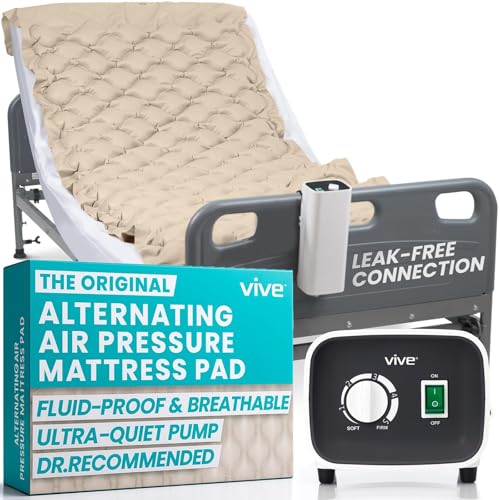
Vive’s pad uses 130 air cells and a proprietary wave-like therapy to distribute weight evenly. The system aims to relieve pressure spots quickly, supporting bedridden patients who struggle to shift positions. The whisper-quiet pump operates at about 22 dBA, offering adjustable pressure levels and a typical cycle lasting around six minutes per cycle. The design emphasizes durability with heat-sealed cells to prevent leaks, ensuring reliable performance over time. This combination makes it a practical option for home care and clinical settings seeking reliable, low-noise operation.
Drive Medical 14027 Med-Aire Low Air Loss System

The Drive Medical system combines alternating pressure with low air loss, designed to optimize pressure redistribution and microclimate control. It includes 20 individually replaceable 8-inch bladders to maximize immersion and a head pillow feature for stability. The durable, removable 4-way stretch PU cover is fluid resistant and vapor-permeable, helping protect the skin from friction and moisture. This setup is suitable for both home care and institutional use where reliable auto-regulation and easy maintenance matter.
Kekoy Alternating Air Pressure Mattress Pad (Blue)

KeKoy’s model arrives compactly packed and expands after inflation to its full sleeping size. It features breathable micro-vents to maintain a cool, dry environment and reduce night sweats. With five adjustable pressure modes and a gentle wave-like cycle every 10-12 minutes, it targets pressure points to promote circulation and minimize skin damage. The pump is designed to operate quietly, supporting restful sleep in home or facility settings.
MedVance Low Air Loss Mattress

The MedVance system emphasizes a quiet operation and a digital interface for easy adjustments. It includes diagnostic alarms and a CPR/deflate feature for emergencies, along with a 8-inch deep cell-on-cell design to prevent bottoming out. A pillow function helps maintain head support, improving patient comfort in static and cycling modes. This combination suits long-term use in hospitals or at home where rapid response and reliability are priorities.
ProHeal Low Air Loss Mattress (Cell On Cell)

ProHeal’s system features 20 cell-on-cell bladders and a two-layer design that preserves air in the lower sections during power outages. Its moisture-wicking micro-vents promote a cooler sleep surface and help prevent skin maceration. An adjustable air flow dial enables customized relief at key body regions, including the buttocks and heels, while the head section is shaped to resist movement during alternation. This makes it a practical choice for hospital beds or home use where stability and reliability are essential.
Buying Guide: Key Purchase Considerations
- Pressure distribution and cell design: Look for a mattress with multiple cells (cell-on-cell or multi-cell configurations) to promote even weight distribution and reduce pressure points. A cycle that alternates every 10-12 minutes is common, with longer cycles providing deeper relief for some users.
- Airflow and moisture management: Low air loss features and micro-vented surfaces help maintain a dry, comfortable microclimate, reducing skin maceration and odor in long-term use.
- Pump noise and power features: A quiet pump (ideally under 25 dBA) supports restful sleep. Some models include memory presets, static mode, or emergency CPR deflate options for safety during outages or quick transfers.
- Durability and maintenance: Heat-sealed air cells and removable, fluid-resistant covers improve durability and ease cleaning. Check for machine-washable covers when possible and compatibility with hospital-grade care routines.
- Weight capacity and size: Ensure the mattress size and maximum patient weight align with the user’s needs (home or hospital settings). Larger sizes may offer more stability but require appropriate bed frames and space.
- Ease of setup and inflation: Some toppers inflate to full size and include simple connectors or quick-install features. Consider your caregiver’s familiarity with medical equipment and time required for setup.
- Warranty and service: A robust warranty and access to replacement parts (bladders, pumps) can reduce total cost of ownership and downtime.
When selecting an alternating air pressure solution, balance the number of cells, cycle timing, noise level, and ease of maintenance with patient needs and caregiver capabilities. For many users, a model offering low-noise operation, reliable durability, and straightforward control options provides the best long-term value and patient comfort.