Robotics projects rely on capable microcontrollers to manage sensors, actuators, and logic. The following five products offer a mix of classic Arduino boards, beginner kits, and multi-board ecosystems that support learning, prototyping, and advanced robotics work. Each entry highlights core features to help you compare options for education, hobby projects, or entry-level development.
| Product | Brand | Key Focus |
|---|---|---|
| Arduino Uno Rev3 | Arduino | Versatile prototyping with ATmega328P |
| Arduino Robotics (Technology in Action) | Apress | Foundational robotics concepts |
| Make a Mind-Controlled Arduino Robot | MAKER MEDIA INC | Brain-computer interfacing & sensors |
| GAR Monster Starter Kit for Arduino | GAR | Multi-board robotics & IoT kit |
| Arduino Uno R3 SMD Kit Contents | Arduino | Compact ATmega328P system |
Mind-Controlled Arduino Robot: Brain as Remote Guide
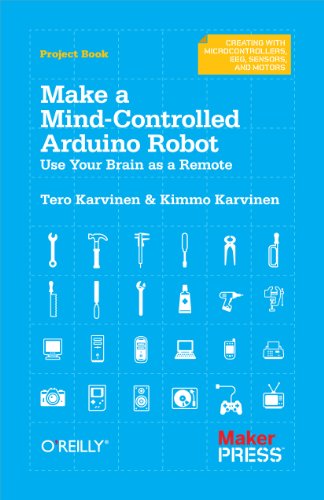
The book “Make a Mind-Controlled Arduino Robot” offers a conceptual and practical path for integrating Eeg sensors with microcontrollers, motors, and basic robotics frameworks. While primarily a guide, it outlines experimental setups, sensor interfacing, and simple control strategies that can inspire real-world robotics projects. This resource emphasizes beginner-friendly steps, ideal for learners exploring brain-computer interfacing concepts and motion control using standard Arduino components.
Arduino Robotics (Technology in Action)
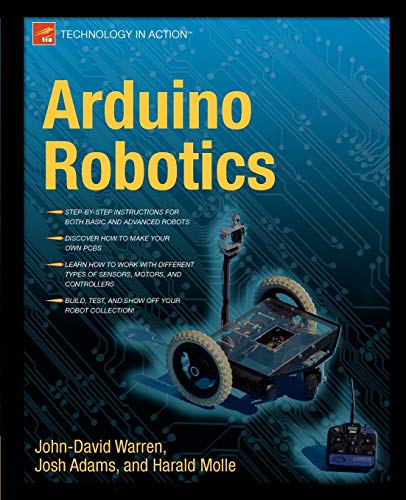
“Arduino Robotics” covers practical robotics projects built around Arduino platforms. The book emphasizes hands-on assembly, sensor integration, motor control, and basic programming techniques to create functional robotic systems. It’s suitable for beginners and intermediate users aiming to deepen their understanding of hardware-software interaction in robotics contexts.
Arduino Uno Rev3 SMD Board with ATmega328P

The Arduino Uno Rev3 SMD board centers on the ATmega328P processor, delivering 14 digital I/O pins, 6 analog inputs, and 6 PWM outputs. It runs at 16MHz with 32KB of flash memory, making it a reliable option for rapid prototyping and education. The board supports USB connectivity and multiple power options, facilitating straightforward setup for robotics and STEM projects.
GAR Monster Starter Kit for Arduino
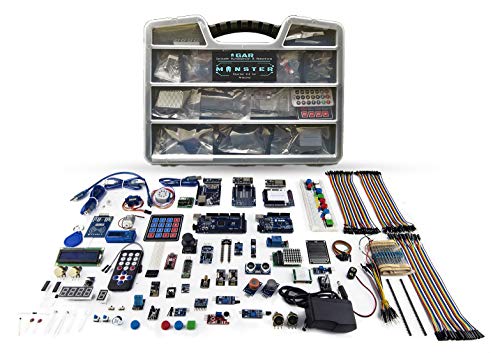
The GAR Monster Starter Kit provides a comprehensive, multi-board setup including Uno R3, Mega 2560, Nano V3, ESP32, and ESP8266. It supplies over 25 sensor modules, enabling a wide range of robotics and IoT projects. The kit includes tutorials, a cloud-backed repository, and organized components to streamline learning and project development, with soldering-free assembly and approachable documentation.
Arduino Uno R3 SMD: Compact Prototyping
The Arduino Uno R3 SMD variant focuses on a compact, surface-mount form factor while maintaining compatibility with the broader Uno ecosystem. It preserves the essential I/O layout, USB connection, and power options that support a broad spectrum of robotics applications, from simple line-following robots to sensor-heavy prototypes. The ATmega328P core remains the backbone for reliable, accessible projects.
Buying Guide: Key Purchase Considerations
- Project scope and complexity: Beginners benefit from starter kits that combine multiple boards and sensors, while advanced users may prefer standalone boards with rich I/O for custom projects.
- Microcontroller core and memory: Boards with ATmega328P provide ample I/O for standard robotics tasks; ensure enough flash and RAM for your code and libraries.
- Number and type of I/O: Evaluate digital, analog, PWM, and communication interfaces (I2C, SPI, UART) based on your sensor suite and actuators.
- Power and form factor: Consider USB-powered boards for desk setups or battery-powered configurations for mobile robots. Size and mounting options matter for compact robots.
- Community and ecosystem: Strong tutorials, examples, and forum support help accelerate learning and troubleshooting, particularly for beginners in robotics.
- Sensor and module compatibility: Kits that include diverse modules (ultrasonic, RFID, RTC, accelerometers) offer rapid prototyping of autonomous behaviors and demonstrations.
- Documentation quality: Clear schematics, wiring diagrams, and example projects reduce setup time and errors during builds.
- Future-proofing: Multi-board ecosystems (like GAR Monster) enable scalable projects across different robot platforms without starting from scratch.
For robotics enthusiasts, selecting the right microcontroller or kit depends on how quickly you want to move from concept to functioning prototype. The entries above span beginner-friendly guides, hands-on robotics literature, compact boards, and expansive multi-board kits, giving you diverse pathways to explore sensing, actuation, and automation in real-world projects.