For individuals who are bedridden or have limited mobility, a quality alternating pressure mattress can help prevent pressure sores by promoting better circulation and reducing prolonged pressure on vulnerable areas. This article highlights five top options, detailing their features, comfort, noise levels, and suitability for home or hospital use. The selections emphasize adjustable pressure, quiet operation, and durable covers to support long-term care at home or in clinical settings.
| Product | Brand | Size | Key Benefit |
|---|---|---|---|
| Vive Alternating Air Pressure Mattress Pad | Vive | Standard/Full | 130 air cells for even pressure distribution and quiet pump |
| Kekoy Alternating Air Pressure Mattress Pad (Blue) | Kekoy | 75″ x 36″ | Breathable micro air vents with 5 modes and 10-12 min cycles |
| Lunderg Alternating Air Pressure Mattress Pad (Cream) | Lunderg | Standard | Static mode option and quiet pump for rest |
| Drive Medical 14027 Med-Aire | Drive Medical | Standard | 20 individual cells with low friction cover |
| Roscoe Medical Meridian Mattress | Roscoe Medical | Standard | Whisper-quiet pump and durable system |
Vive Alternating Air Pressure Mattress Pad
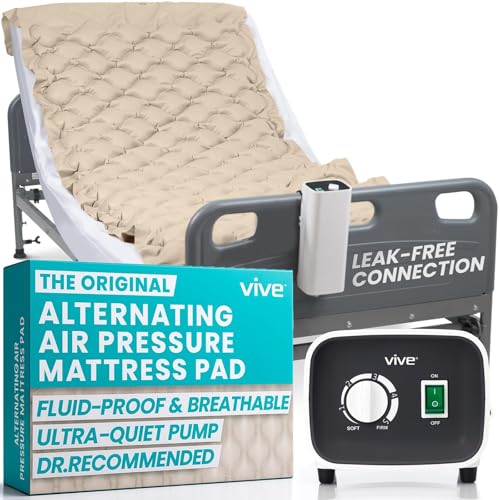
The Vive mattress pad uses an alternating air cell system with 130 cells, designed to evenly distribute weight and relieve pressure. Its waveform cycling helps prevent prolonged pressure on common sore areas, supporting bedridden patients who cannot shift frequently. A whisper-quiet pump operates at around 22 dBA, offering multiple pressure levels for a customizable experience. The system is built for durability, with heat-sealed air cells to minimize leaks. This option suits home care or hospital use where quiet operation and reliable pressure relief are required.
Kekoy Alternating Air Pressure Mattress Pad (Blue)

The Kekoy blue mattress pad features 130 air cells and a breathable micro-vent system to maintain a cool, dry sleeping environment. It cycles every 10-12 minutes with a gentle wave-like motion to relieve pressure gradually and promote circulation. The pump offers five adjustable modes, from firm to soft, enabling personalized comfort. The unit expands from a compact package to its full bed-size after inflation, making it convenient for home use and care settings.
Kekoy Alternating Air Pressure Mattress Pad (Beige)

This beige Kekoy model employs 130 air cells and a low-noise pump with five adjustable modes. It uses a cycle pattern that subtly shifts pressure every 10-12 minutes to prevent continuous loading on any single area, supporting skin integrity and circulation for long rest periods. The design emphasizes a quiet operation and a durable cover suitable for home care or institutional settings.
Lunderg Alternating Air Pressure Pad (Cream)
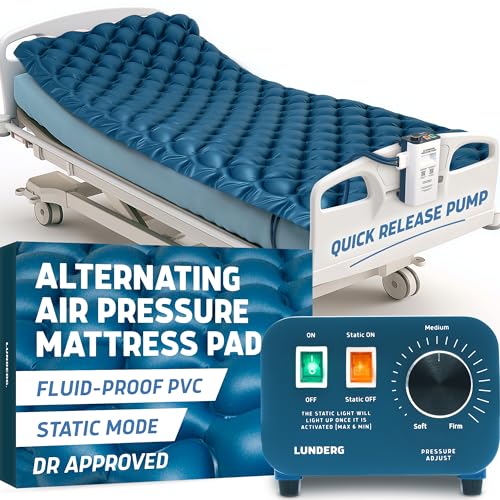
The Lunderg cream mattress pad includes a static mode option for days when constant alternation is not needed, allowing the entire surface to stay inflated for steady support. The system is designed to support up to 300 lbs and features a quiet, upgraded pump with quick-connect fittings. Its medical-grade construction emphasizes durability and ease of cleaning, making it suitable for home care or hospital use in bed sore prevention and healing contexts.
Roscoe Medical Meridian Mattress

The Roscoe Medical Meridian system combines reliability with effective pressure relief for home or hospital beds. It includes an alternating pressure setup and a whisper-quiet pump designed to support users up to 300 lbs. This solution focuses on preventing bed sores through consistent cyclic pressure while offering practical durability for long-term care environments.
Buying Guide: Key Purchase Considerations
- Pressure cycle management: Look for mattresses with multiple air cells and a programmable cycle (roughly 10-12 minutes) to reduce constant pressure on vulnerable areas.
- Pump noise and comfort settings: A quiet pump (ideally under 30 dBA) with adjustable firmness and static mode can improve rest and caregiver practicality.
- Size and fit: Choose a pad that matches the patient’s bed size (e.g., 75″ x 35″ or 75″ x 36″) and supports easy installation on home or hospital beds.
- Durability and maintenance: Heat-sealed air cells and a waterproof, easy-to-clean cover help ensure long-term use in care settings.
- Weight capacity and safety: Ensure the mattress supports the patient’s weight (commonly up to 300 lbs) and includes secure anchoring to prevent slippage.
- Mobility and rotation: Consider whether static mode is needed for recovery days or if continuous alternation is preferred for prevention.
- Care environment: For home care, prioritize ease of inflation, deflation, and cleaning; for hospitals, look for hospital-grade materials and reusable pump systems.
- Allergen and hygiene considerations: Waterproof or fluid-resistant covers help maintain hygiene and reduce skin irritation from moisture buildup.
When selecting a pressure sore prevention mattress, evaluate how well the product integrates with the patient’s care routine, caregiver workload, and the care environment. The five options highlighted here provide a range of sizes, pump quietness, and cycle options to suit different needs while emphasizing safety, durability, and effective pressure relief.